The Deeper Work of Trust-Based Philanthropy


By Mia Reilly, Deputy Director, Tara Health Foundation
Turns out, trust-based philanthropy has no endpoint.
A few months before this conversation with Shaady Salehi, then Co-Executive Director and now Senior Fellow at the Trust-Based Philanthropy Project, I led the Tara Health Foundation through a comprehensive rebrand process, including the creation of a new website to share our work and stories as we spend out. As with all of our communications work, we made a commitment to full transparency: we'd talk about our work and our approaches clearly and honestly, and we'd resist philanthropy’s tendency to prove our goodness by only talking about how great we are. That commitment sparked a lot of organization-wide conversation about how to describe our grantmaking approach.
The first version of our new site called our approach “relationship-based” because we didn’t feel ready to call ourselves “trust-based.”
Yes, we did practice the hallmarks of trust-based philanthropy: multi-year unrestricted grants, streamlined application processes, leveraging our networks and relationships for grantees. While we had always tried to center trust in our processes, calling ourselves trust-based felt like it would flatten the harder truths of our story, which includes plenty of moments when we didn’t show up that way, when we caused harm and got hard feedback, and had to grow and change.
These were moments where, in hindsight, we can see that something other than trust drove our decisions or behaviors.
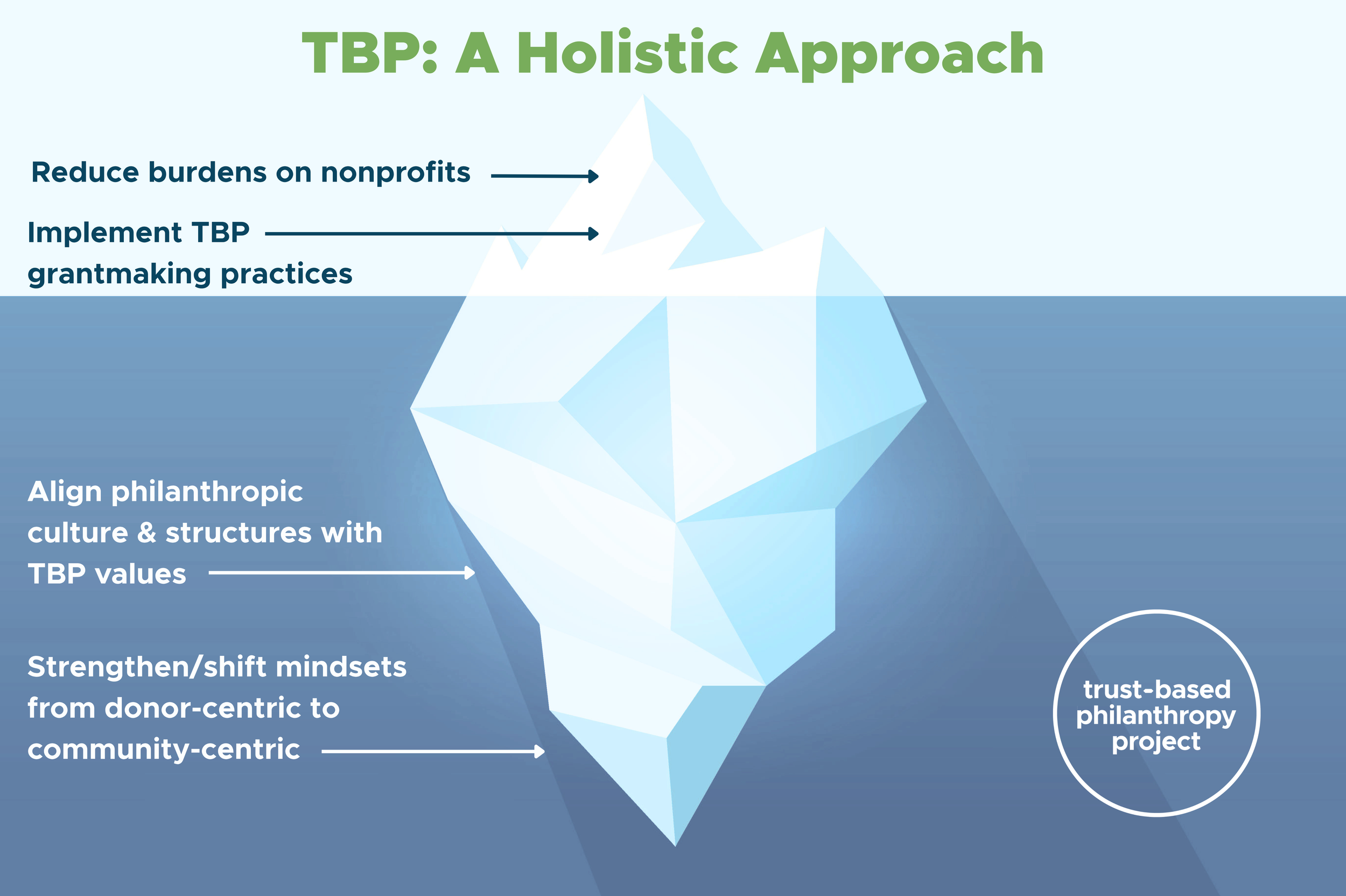
When Shaady shared her iceberg, though, I realized we’d been thinking about this all wrong. Trust-based philanthropy isn’t an endpoint, nor a standard of perfection; it’s an ongoing unfolding of what it means to de-center ourselves as expert funders, move beyond a transactional relationship with grantees, and open ourselves to the collective growth and learning we can realize when we aren’t so focused on using our dollars to control the actions and outcomes of others. During our conversation, I thought, “Wait, that is us.”
I remain committed to a point I made in the video: grantee relationships, while important spaces for us to reflect and grow in, can’t be the only place where we as funders do our learning. The good news is, the importance of trusting relationships remains the same when we turn to our peers to learn and organize each other around doing philanthropy differently.
As we saw with peer funder relationships like Grove Foundation’s Alicia Harris and our own Elise Belusa, neither one of them sought to change the other. Whether Alicia, in supporting Elise as she sought to embody values of equity, or Elise, in supporting Alicia in mobilizing other funders with the Abortion Movement Fund, it was through their own trust-based relationship that mutual learning, and ultimately collective action, took place.
This is why, after my conversation with Shaady, we decided to rename our approach to philanthropy as trust-based; these are the types of relationships we aim to cultivate with our grantees and our peers.
I’m realizing now it’s not about doing trust-based philanthropy perfectly (as white supremacy culture would have us believe).
Instead, trust-based philanthropy is about building the kinds of relationships with grantees and peers where we can reflect back to each other when we’re living our values and when we’re not, and hold each other to who we say we want to be—ultimately, to live into and realize the world we yearn for.