The Relational Capital Behind Rapid Response


By Diana Parker-Kafka, Abortion Movement Fund Advisor and former Executive Director of Midwest Access Coalition; Founding Board Member for Apiary for Practical Support, Elevated Access, and Foxglove Fund
We keep abortion access intact when we reach for each other.

What you may not realize from Alicia Harris and Elise Belusa’s conversation in Episode 16 of Make Shift Happen is that their strong, accountable relationship unlocked the power of other strong, accountable relationships across our movement. I came to know Elise through Tara Health’s decision to follow Alicia’s work at the Grove Foundation and invite grantees, including myself, to inform funding priorities for the Abortion Movement Fund (AMF). Relationships like Elise and Alicia’s laid the groundwork for crucial collaborative—and therefore also deeply relational—work that has held abortion funds together during the last five years of attacks. I could think of no better example than the work I’ve been able to do in collaboration with Odile Schalit.
This is a love letter to that work, including the Abortion Movement Fund, and to the power of the authentic relationship that has made it all possible.
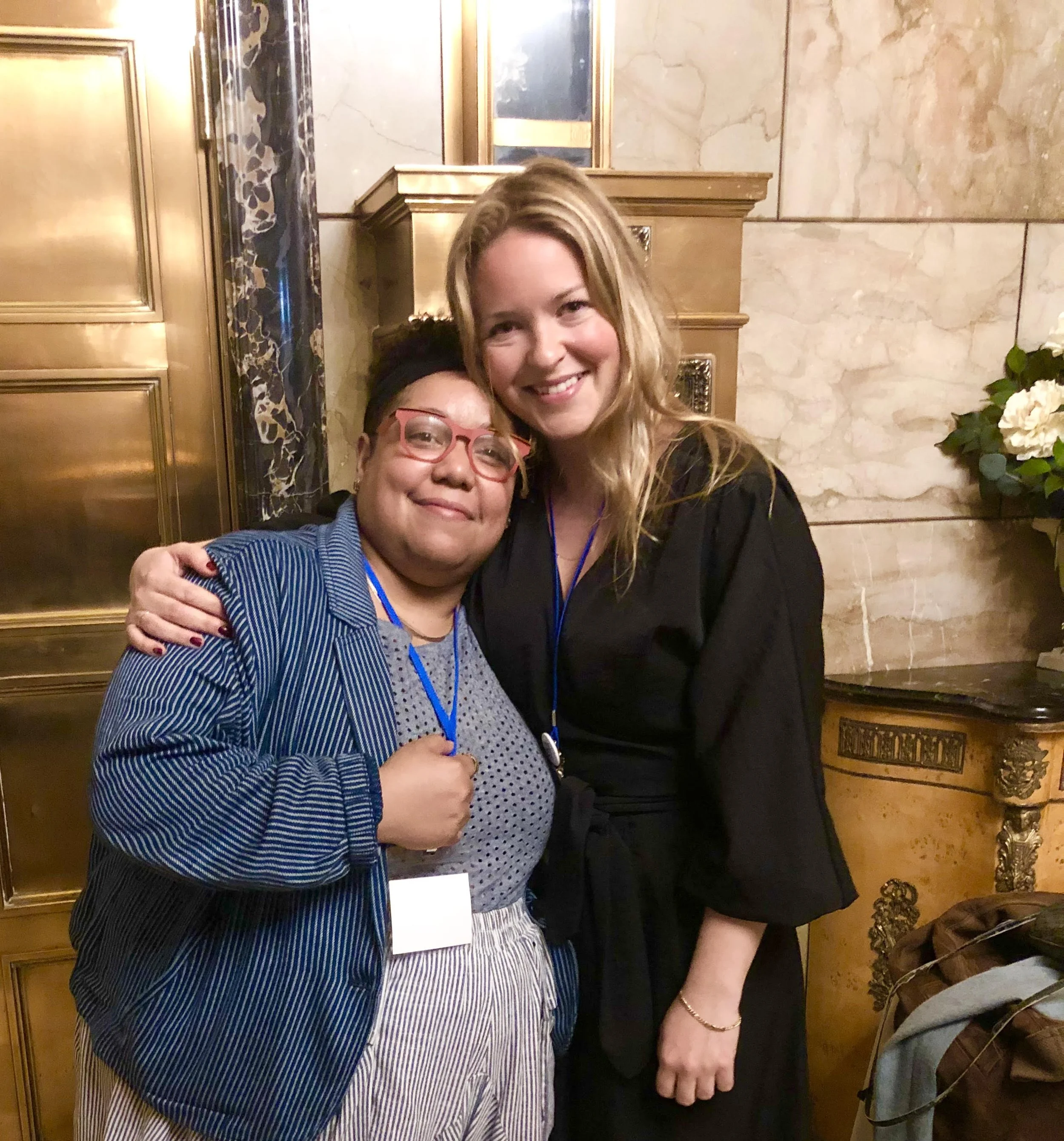
When Odile and I met, we were both executive directors of organizations building holistic models for providing practical support: the travel, lodging, childcare, and logistics that make it possible for someone to actually reach abortion care. We were doing this during the long anti-abortion prelude to Dobbs that buried abortion seekers under bans—108 in 2021 alone. In this deeply challenging and fraught context, the two of us found ourselves beautifully aligned in our values and our focus: educating people about the injustices that abortion law created in our communities, even under Roe v. Wade, and providing holistic support for travelers and the folks who guide them.
Our deepening relationship helped us work quickly to keep up with the rising number of state bans and to prepare for a SCOTUS decision that would end Roe’s protections. Elise followed our work, got behind it, and then asked us to steward the newly created Abortion Movement Fund, the genesis of which she and Alicia discuss in Episode 16.
Through the early years of the AMF, Odile and I moved nearly $4 million to practical support organizations between 2022 and 2024, helping cover the sudden and immense travel costs for thousands of people in the Southwest and Midwest accessing abortion care, first as a result of Texas’s newly enacted SB8, a law that made it harder to get or provide abortion care, and then as a result of the overturning of Roe v. Wade.
Our movement’s ability to quickly adapt, innovate and protect against laws designed to give the state control over our bodies has required deeply held relationships with each other and our histories.
With Tara Health, the Grove Foundation, and other innovative funders alongside us, AMF has infused the growing network of practical support across the country with financial resources to not only add practical support services, but also build relational capacity, things like hiring a longtime volunteer expert or help with administrative growth to meet the post-SB8 and then post-Dobbs need.
It's difficult to think about this work as a success; AMF’s early years were a very stressful period and people in Texas are still bound by SB8’s injustice. But these successful moments of collaboration, rooted in relationships of trust and movement leadership, have kept access intact—a soaring feat, given our context. It is a success when funders maximize the impact of their capital by coming together, trusting the experts of the work they want to support, and using new funding pathways to enable them to move quickly when they need to.
It is a success when we can find our people and reach for one another to get through the hard times.
In Episode 10 of Make Shift Happen, Tenesha Duncan of Orchid Capital Collective spoke of relational capital, the multi-generational value of it, and the need for funders to be open to the unfamiliar but innovative results of these relationships. Traditional philanthropy, as Alicia alludes to, comes from a place of holding and protecting wealth, rather than moving into the places it’s most needed. This protectionism has created scarcity and competition among organizations, undermining our movement’s ability to build the kind of relationships we need to show up for people and their reproductive autonomy.
But efforts like AMF help set us in a new direction—one this moment demands. Odile’s and my organizations could have been competing for the same limited resources, but instead we propped each other up and both grew substantially when abortion seekers were facing unprecedented numbers of new barriers. This was possible because funders like Tara Health moved resources with trust and abundance, valuing the relational capital between us as individuals and also between our teams who were innovating practical support tools together. With AMF further investing in that relational capital, practical support organizations throughout the country received large grants to sustain their work during a time of intense need.
No one of us, alone, can bust through the barriers to—let alone fully realize—a publicly-funded, sustainable, all-trimester abortion care network for everyone.
We need each other. Relationships like mine and Odile’s and Elise and Alicia’s are rooted in a deep love for practical support, all-trimester abortion care, and the public’s desire to get the state out of our bodies and homes.