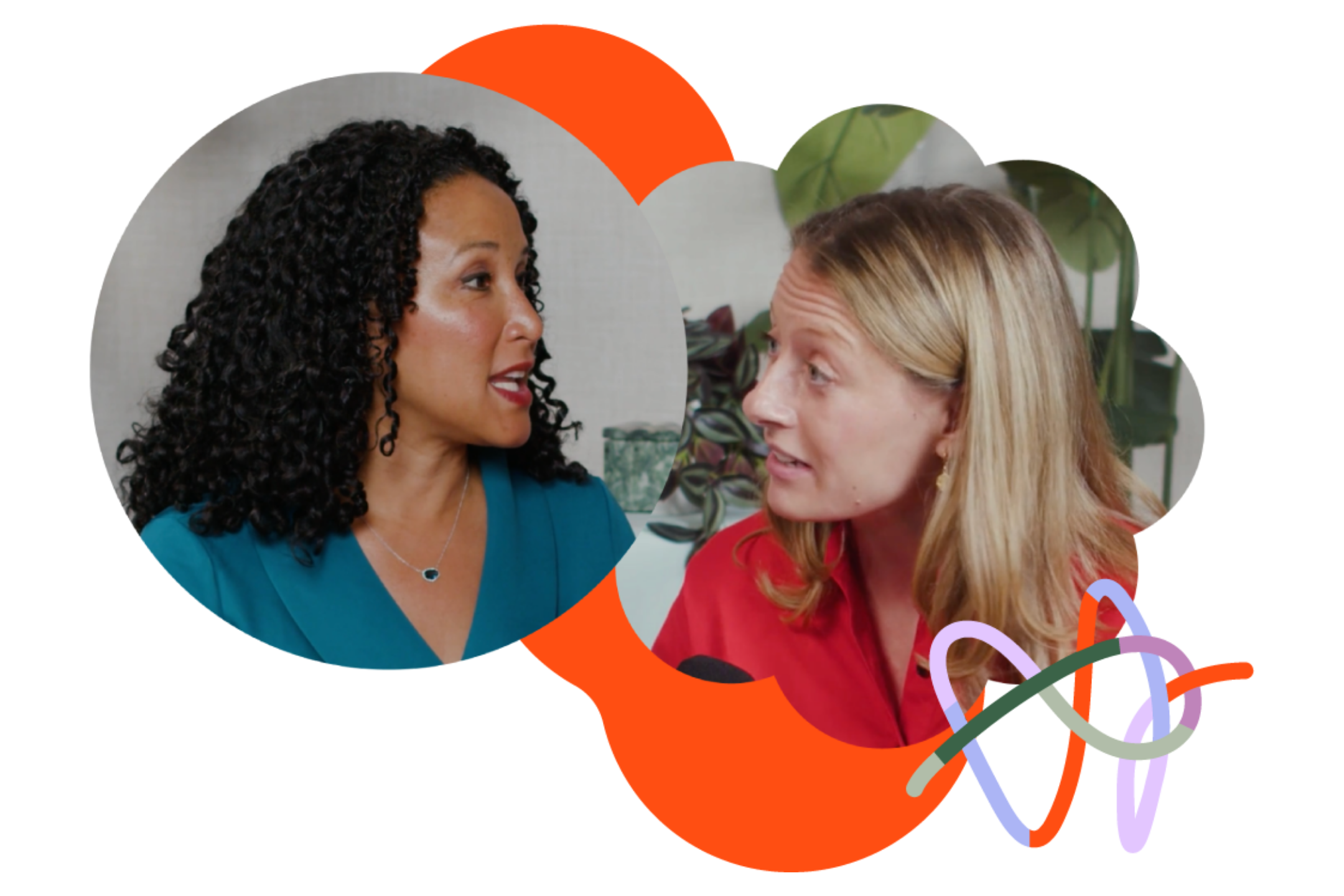
By the Tara Health team
Welcome to Make Shift Happen. This season, we’re after a different way of governing private foundations and the dollars they’ve set aside for public good.
Philanthropy inherited its rules from The Gilded Age, and governance is where those rules still live. Tara Health’s Mia Reilly sits down with Dimple Abichandani, author of A New Era of Philanthropy, on what becomes possible when we write new ones. Let’s dig in.
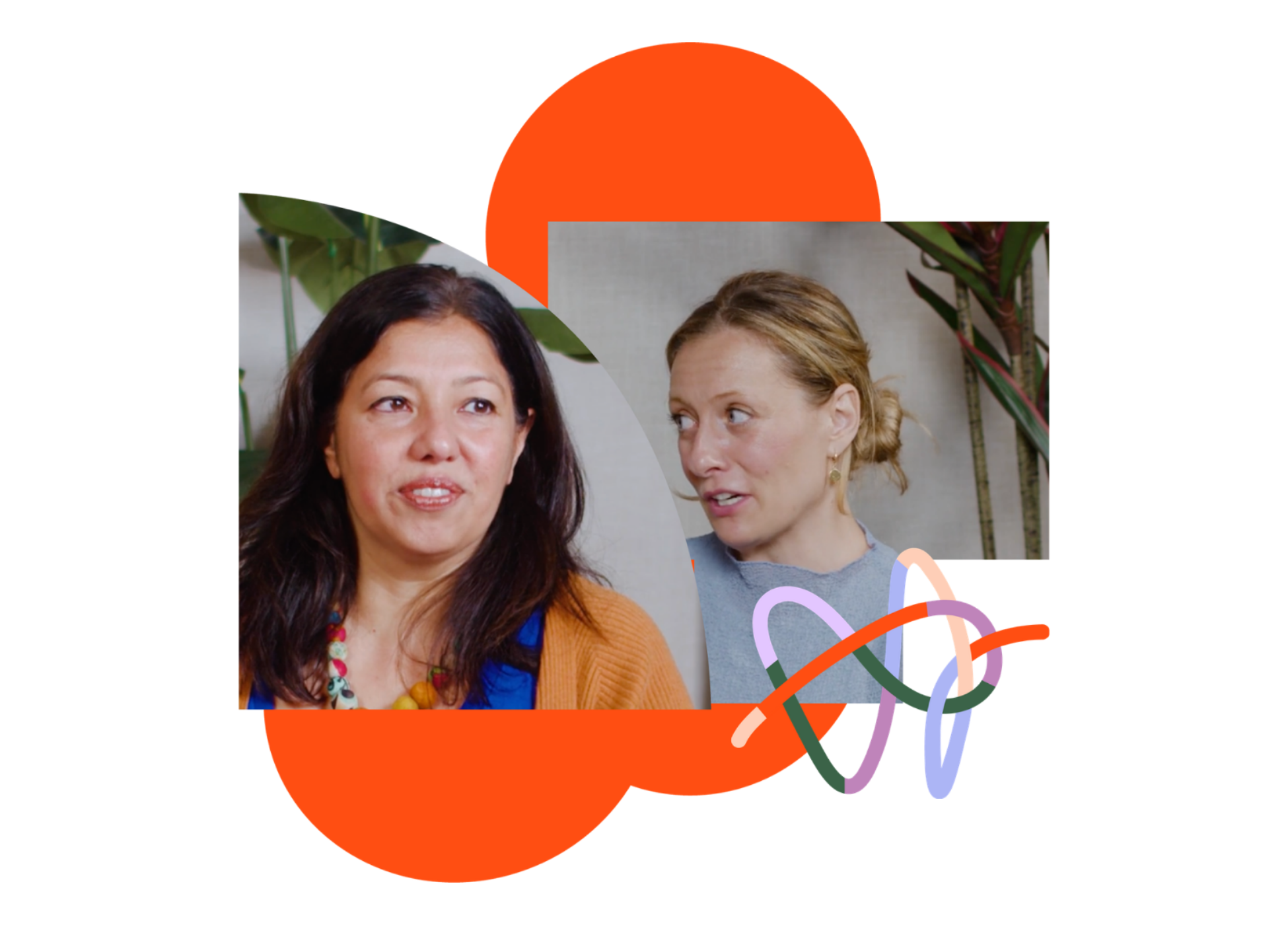
MIA REILLY:
Dimple, I am so thrilled that you are here today
DIMPLE ABICHANDANI:
Oh, I'm so happy to be here. It's such a joy, of course.
MIA REILLY:
Yeah. As you know, your book, A New Era of Philanthropy, has been so influential in our thinking about this season, most obviously with our focus on governance. As we were going out in the world and doing our research and discovery process, we heard so many of the themes that you lay out in your book, and it really helped us sharpen our thinking and clarify our analysis. So starting here with you feels so fitting. And I will say that the question you raise in your chapter on governance of what it will take for our governance structures to reflect the world we want to see and build has become such a foundational anchor for Make Shift Happen Season 2. All of the conversations that follow this one, like pick that question up and seek to learn about it and answer it in some way. So thank you.
DIMPLE ABICHANDANI:
Thank you. And I love that. I'm so looking forward to the series. It's going to be wonderful.
MIA REILLY:
And I have to add on a personal note that getting to be in relationship with you and our preparation for this conversation today has just been you a real highlight. I deeply admire the way you live your practice of embodying change and have just watched you really bring your full self and your whole humanness to our collaboration and really feel how deeply tied that is to the work of transformative social change.
DIMPLE ABICHANDANI:
Oh, Mia, thank you. It's been such a joy to partner with you on this.
MIA REILLY:
For us as well. Okay, so let's jump in. We are recording this conversation in summer of 2026, and I don't need to like lay out the moment for you or for you. We're all living it.
But what I will say is that so many of us who are deeply invested in philanthropy and believe that the sector has a role in realizing a better future and a better world are coming together in conferences and in boardrooms and in, you know, one-on-one conversations to ask, so what is philanthropy's role right now, given the political and legal and economic reality? And so, Dimple, when you think about the question of what does philanthropy need to do differently to meet this moment, where does that conversation start for you?
DIMPLE ABICHANDANI:
You know, this question of how philanthropy meets the moment, it's been an obsession of mine. And I'll say two things about it. So one is that those of us working in the sector, we've been in this moment for at least a decade. And so there's something here where we need to understand that what we are calling a moment is actually an era and that's part of why I called my book A New Era, right? Because it's been at least a decade since we've had the luxury of going through just one crisis at a time, right? We are in these times of polycrisis where we are living through intersecting and compounding crises and our philanthropy is struggling to match that. You know, the inquiry at the heart of my book, A New Era of Philanthropy, is this related generative question of what is a philanthropy for our times? And one of the things that surprised me as I was writing the book is that to understand kind of where we go from here in philanthropy, I had to actually understand how we came to be here. And so that was one of the kind of gifts of writing the book.
MIA REILLY:
And how did we come to be here?
DIMPLE ABICHANDANI:
Well, the way that I sort of began exploring that is that I had this sort of funny run-in with Andrew Carnegie.
MIA REILLY:
Of course.
DIMPLE ABICHANDANI:
I was a few months into writing the book, and I was working at a public library in Pacific Grove, California, this tiny seaside town. And I was wrapping up this writing session, and I look up on the wall, and right there in front of me, looking down at me was this portrait of Andrew Carnegie. And at the time, I just thought, why is this here in 2024? Right? Like, in a public library, you would think that we would have art from the kids that live in the community or something.
MIA REILLY:
Right, right.
DIMPLE ABICHANDANI:
But, like, here's this portrait. And I also thought, didn't he write about philanthropy? Like, that's a funny coincidence. And I took a really corny selfie of myself and Andrew, just thinking like, we're two buddies who write about philanthropy. But it was actually after that, like as I looked at that really hilarious selfie, that I started to kind of, for the first time ever, actually read his writings. And it was there that I actually found what became the central argument of the book. In his two essays called The Gospel of Wealth, that he wrote that I had actually never read, that I started to kind of piece together what's the philanthropy for our times.
MIA REILLY:
You know, Dimple, I have to admit, I also had never read The Gospel of Wealth, and I actually hadn't heard of it prior to reading A New Era of Philanthropy. So I imagine that might be true for other folks. And so I'm curious to know, what do you think is important for funders today to know about Carnegie's Gospel of Wealth?
DIMPLE ABICHANDANI:
Well, it's funny. Maybe you and I didn't read it for the same reasons. I didn't read it because I thought, oh, isn't that that essay that the very wealthy person wrote for other very wealthy people, where he kind of tells them that if you're so lucky to be wealthy, that you should share your wealth. And that was kind of my shorthand understanding of what The Gospel of Wealth was. And in fact, that's not what it is at all. And so I think what's helpful for funders to know today is that this document is really understood to be the origin document of modern philanthropy. It's really alive and well today. I tell the story in the book about how when Warren Buffett met a really young Bill Gates and he thought to himself, well, this guy is going to be somebody, he gifted him Carnegie's Gospel of Wealth.
MIA REILLY:
Wow
DIMPLE ABICHANDANI:
Yeah, it's like interesting to think about how that played out.
But, you know, what really surprised me is when I opened it up and started reading it, you know, Carnegie's writing it in a moment that's so similar to ours, because he's writing it in this moment where the economic order and system is shifting, and it's shifting towards greater concentration of wealth and power in the hands of a few.
MIA REILLY:
Sounds familiar.
DIMPLE ABICHANDANI:
It's very familiar. And he starts off The Gospel of Wealth, basically naming that and saying, I know this is hard for most of you. I know that many people are struggling. I know that you're really scared about how you're going to fare in this new economic system. But then right there in the first few paragraphs, he says, but the system is not, I'm paraphrasing, but like, he's like, this is not up for debate. And he calls it quote, the law of civilization. And so I think it's really key for those of us working today to understand that a system of extreme and exploitative capitalism that leaves out most people is enshrined in our founding document as the law of civilization. And he doesn't leave it there. Then he says, but don't worry, I've got a great idea.
MIA REILLY:
Let me guess.
DIMPLE ABICHANDANI:
Philanthropy. And he says, don't worry, we're going to take care of you. All right.
So this is an often quoted statement, but he goes on to say, we're going to do better things with this money than you would have done had it just come to you in, quote, small sums. And by small sums, of course, what he's talking about is wages. And so, again, right there in our founding document, is almost this justification of economic exploitation with a promise of generosity later. So for me, the thing I honed in on that I think hasn't gotten enough attention in The Gospel of Wealth is that Carnegie's really clear about the purpose of philanthropy. And he says, we are going to do a little bit of good here, but we're not going to try to change the systems. And of course, he's saying that because the systems have worked really well for him, right? They've allowed him to accumulate this disproportionate, unheard of amount of wealth. What I argue in A New Era is that Carnegie's philanthropy, and really the first 140 years of philanthropy that followed him, can be understood as a gilded philanthropy. That term Gilded Age, it refers to the covering over with fake gold of something that's kind of hollow or corrupt underneath. And his assertion, he says, you know, it'd be criminal for us to try to change the systems.
MIA REILLY:
Criminal.
DIMPLE ABICHANDANI:
Criminal. He's like really a dramatic guy. There's a lot of flair in a Gospel of Wealth. So he's like, yeah, it'd be criminal to try to change these systems that approach has led us to a philanthropy that gilds or covers over the extremes and the harms of these systems that don't work for most of us. And the answer to what's a philanthropy for our times is that we have to actually stop this philanthropy, engaging in a philanthropy that sees its purpose as gilding and move to a philanthropy that I call like an alchemy, where what we are doing is transforming the systems that shape how wealth and power are held. And we do that by transforming this capital, right? This capital that's sitting in our endowments, we transform it into more futures of flourishing.
MIA REILLY:
One of the things that I just gained so much value from in A New Era of Philanthropy is how you do such a great, really accessible job of showing the ways that we're still living that gilded philanthropy in our institutions and in our practices. Where do you see gilded philanthropy showing up in our governance practices in this moment?
DIMPLE ABICHANDANI:
The blueprint that we have inherited for philanthropic governance, it also has a lineage. So the blueprint that we've inherited is one that I would characterize as being low accountability, low transparency, and importantly, low proximity to community, high proximity to wealth.
MIA REILLY:
And so just to clarify, to make sure I'm understanding, the folks who are doing the governing are folks who already have access to wealth and power in outsized ways, right? And their proximity comes from access to wealth and power.
DIMPLE ABICHANDANI:
So it's not uncommon, for example, in family foundations to have boards that are comprised of the third generation, the fourth generation, the fifth generation, descendants of the wealth holder. And I talk about this in my book. It's not that one can't perform governance if you're connected to wealth, it's that that governance shifts the closer we are to community and where the resources are flowing to. So this model, interestingly, like how did we end up with this as our blueprint, right? And it actually comes to us from the founding of the Rockefeller Foundation. And so I share this story about how when John D. Rockefeller started his foundation, there had never been a large general purpose foundation. And so he went to, he thought he needed to go to Congress to get a charter, a federal charter. He was alive in a different time in that there was widespread, deep suspicion about the concentration of wealth and power represented by that foundation. And so when he went to go get this charter, he had to make a series of concessions. And importantly, one of the concessions that he made was that since this entity, this foundation, had at its core a public purpose. That, of course, the governance would have a public component to it, right? That he couldn't just have, like, himself and his family on this board. And so, you know, the proposal that he floated was not what we would think of as, like, community voice today. It was like, you know, president of Harvard and the head of the Senate and a Supreme Court justice. But importantly, Congress was appointing a entity to oversee the decision-making and the accountability of this foundation. He made a bunch of other important concessions that had they been accepted, I think our whole sector would look different today. But after four years, he was not able to overcome the concerns about the threat to democracy posed by this foundation. Take that in. And so then what happened was that he turned around and went to New York State. And we can only imagine how many friends in high places John D. Rockefeller must have had in New York State. And so he was able to set up his foundation without any concessions. And so that foundation and its governance model became the blueprint for most foundations even today.
MIA REILLY:
I love the way that story illustrates how this blueprint was constructed, right, was created and is something that therefore we can innovate on, which you really speak to in your book. And so when it comes to building a new approach to governance, where do we start?
DIMPLE ABICHANDANI:
So I'll give you a couple starting points. I will say that the governance that this new era demands is one that is high on accountability, high on transparency, and high proximity to community, right? So that's like we need to evolve this blueprint that we've inherited. I'll share two opportunities that I think we have to do that evolution work. So the first is we really need to reimagine and redefine and reframe our understanding of fiduciary duty.
MIA REILLY:
Love that.
DIMPLE ABICHANDANI:
And so, I mean, I should say like, I'm kind of a nerd when it comes to this stuff because I'm a lawyer by training. So I love nerding out on what it is to be a fiduciary. all about those duties of care and duties of loyalty.
MIA REILLY:
I think you're in good company.
DIMPLE ABICHANDANI:
But I think something that we consistently get wrong as we live into our governance responsibilities is that we think, mistakenly, that our fiduciary responsibility attaches solely to the endowment. And so we think that it's our job as trustees to either maintain or grow this pot of money. But in fact, what is unique about philanthropy, as opposed to some other type of trust that one might be a fiduciary of, what's unique about philanthropy is that we are not just pots of money. We are actually mission-based organizations. And so I and I think many others would argue that the fiduciary responsibility and the fiduciary duty attaches to the mission. And in practice, what that means is that sometimes, hopefully many times, you will be spending those assets. You will be drawing down that capital to further your mission. Put another way, if we are doing it right, then we actually end up with less money and more flourishing. And that that is the highest fulfillment of our fiduciary responsibility. So that's one piece. I don't know if you have any thoughts on that.
MIA REILLY:
I'll just say really powerful and mirrors so much of what we're hearing in this series. We have the Sewall Foundation who's speaking about their work to expand and redefine fiduciary duty. And we at Tara Health have taken this effort up in our own work to say, What is actually the law here and what's the norm that we've interpreted as law? What opportunities are opened up when we expand that definition out?
DIMPLE ABICHANDANI:
So exciting. So great. And then the second opportunity. So, you know, the chapter that I wrote about reimagining governance was really informed by extensive interviews with trustees and CEOs. And one of the kind of through lines that I heard in those interviews was how much identity plays a role in our actual governance practice, in how people show up and how they hold their governance responsibilities. And I really took that as an opportunity to think creatively about what are the identities that we need in governance right now. And so in the book, I kind of flesh out six different identities. I'll just offer one here right now as an example. The identity of moving from being a holder of wealth to a mover of wealth, right? That who you are still is the same, like we hold multitudes, but that the identity that you lean into in your governance is that you are here to ensure that resources are flowing, right? As opposed to you are here to hold them and potentially hold them back.
The identity piece is someplace I think is like rich for exploration. And it's a place that we can lean into the fact that we can evolve, right?
MIA REILLY:
Yeah. And I think people really want that and are craving that evolution.
DIMPLE ABICHANDANI:
Absolutely.
MIA REILLY:
It has been hard for me, at least, to keep moving forward in times that just can feel really hard. And I've actually really found so much hope in your book. And I've been so inspired by your investment in the new era and by your clear sightedness into how we get there. And so I'd love to hear from you what you're feeling most hopeful about right now. What you see becoming possible when a shift in purpose aligns with a shift in practice.
DIMPLE ABICHANDANI:
You know, I've had the gift of speaking to so many foundation boards over this last year, and in almost every one of those encounters, pretty early on, some trustee will say some version of, you know, it's always felt like something's not quite right about how we do this.
MIA REILLY:
We heard that too, over and over and over again.
DIMPLE ABICHANDANI:
And what that says to me is that we are ready to evolve. We are hungry to evolve and that we just haven't had the blueprints and the roadmaps. And, you know, what I offer in A New Era is a vision of how we would practice philanthropy, right, including governance if our purpose was transformation. And so seeing all these places in the field where there's a hunger and a coming to the work of adopting it actually gives me a lot of hope that we can and we will meet this moment.
MIA REILLY:
Dimple, that feels like a really beautiful place to end. I want to say thank you so much for what you have contributed to our work, for what you've brought to the field. And for helping us find our footing for Make Shift Happen Season 2 as we embark on this exploration of what it will take to transform governance. So thank you.
DIMPLE ABICHANDANI:
Thank you so much. It's been such a pleasure.
MIA REILLY:
For us too.
Mentioned in episode: